
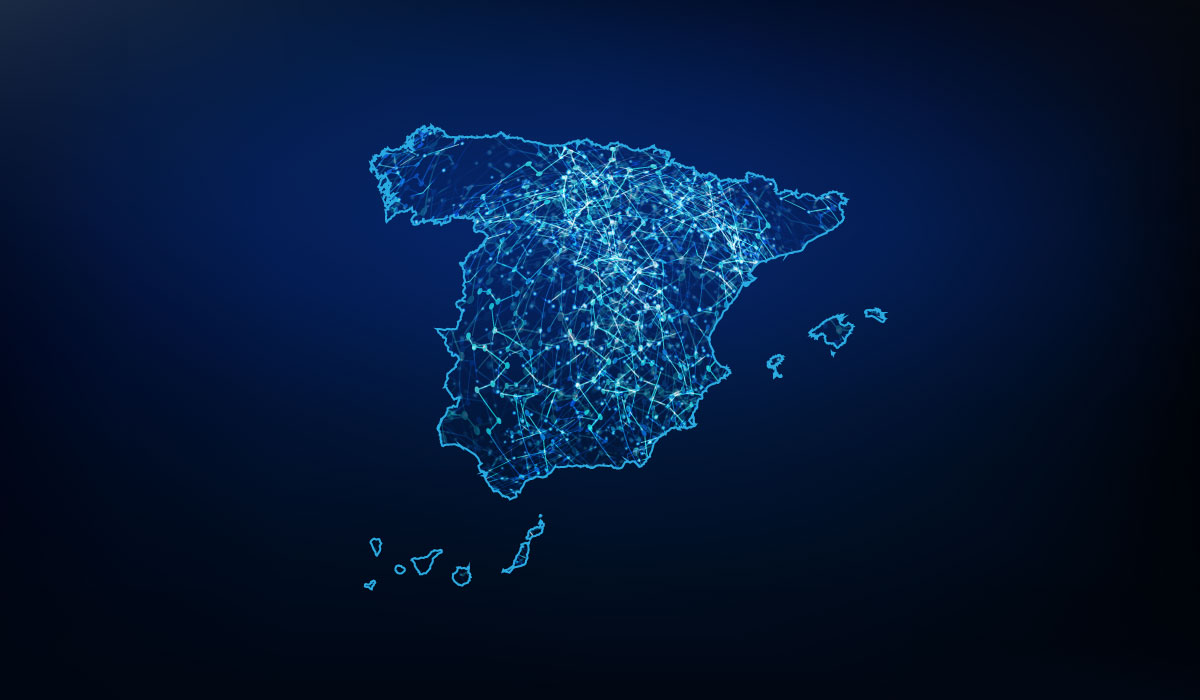
The e-invoicing legislative framework in Spain does not rely on a single regulation. It is rather an evolving environment made up of different laws and systems that have been developed at different times and with specific objectives.
Understanding how these elements fit together is essential for companies preparing for compliance, as well as for those looking to integrate mandatory e-invoicing in Spain into their operations efficiently.
Check out below information on the e-invoicing framework in Spain and its current status.
Crea y Crece Law: mandatory B2B e-invoicing in Spain
The Crea y Crece Law introduces the obligation to use e-invoicing in transactions between companies in Spain. Although it may be perceived as a purely technological regulation, its objective goes beyond that: it seeks to promote digitalization, while also combating late payments and increasing payment transparency.
The recent approval of Royal Decree 238/2026 and the publication of the draft Ministerial Order (currently in the public consultation phase) represent a significant step forward in the development of the regulation.
In this regard, October 1, 2026, has been set as the effective date of the future Ministerial Order. From this moment, the countdown towards the mandatory adoption of e-invoicing in the B2B environment will begin, with a gradual rollout depending on company size.
However, the obligation is not limited to issuing and receiving invoices in a structured format. It also introduces the requirement to communicate the status of each received invoice (accepted, rejected, or paid), which involves adapting systems to capture and report these statuses automatically and within the required timeframe.
The role of the Anti-Fraud Law and VeriFactu
Within the legislative framework of e-invoicing in Spain, and alongside the broader digitalization process, there is another regulatory track focused on ensuring the reliability of invoicing systems: the Anti-Fraud Law.
This is where VeriFactu comes into play. Unlike the Crea y Crece Law, it does not primarily require the issuance of e-invoices. Its purpose is different: to ensure that the invoicing systems used by companies comply with certain technical requirements that prevent manipulation or fraud.
In other words, while some regulations define what must be done (issue e-invoices), others define how the systems that enable it must behave.
The implementation timeline for VeriFactu has been recently adjusted. Although it can be adopted voluntarily in advance, it is not yet mandatory.
If you want to learn more, watch Alvaro Meca, Growth & Partnership Manager at Voxel, discussing this topic (in Spanish, with English subtitles):
Regional e-invoicing specificities: TicketBAI
In addition to this national context, there are also regional initiatives, such as TicketBAI in the Basque Country.
This system introduces specific requirements on how invoices must be generated, recorded, and reported, reinforcing tax control from a regional perspective. For companies operating in this territory, understanding how it works is essential, as it coexists with national regulations.
ViDA and the future of e-invoicing in Europe
Although the focus may be on the national level, the legislative framework for e-invoicing in Spain is part of a much broader trend. At the European level, initiatives such as ViDA (VAT in the Digital Age) are driving a more digital, automated, and interconnected tax model.
A key aspect of the ViDA project is mandatory e-invoicing, which is positioned as a driver of digital transformation in VAT management.
Beyond compliance
Complying with regulations is only part of the challenge. The real difficulty for companies is integrating these requirements into their day-to-day operations without losing efficiency.
As Álvaro explained, not all invoices are the same: there is a difference between an invoice that simply meets legal requirements and one that brings value to the business. While regulations may only require a limited set of data, day-to-day operations need richer information (purchase order references, delivery notes, bookings…) to enable automation and reduce manual intervention.
This is where e-invoicing stops being an obligation and becomes an opportunity to improve efficiency.
Is your company ready to adapt to the new e-invoicing framework in Spain? Discover how to do it more efficiently: contact us at info@voxelgroup.net and our team will get in touch with you.